
Whether or not it is necessary to do so is the question in the current business language world. The UK business pressure is rising to facilitate business to show how they are environmental with respect to the corporate social responsibilities under open ESG (Environmental, Social and Governance) reporting.
Sustainable ERP:
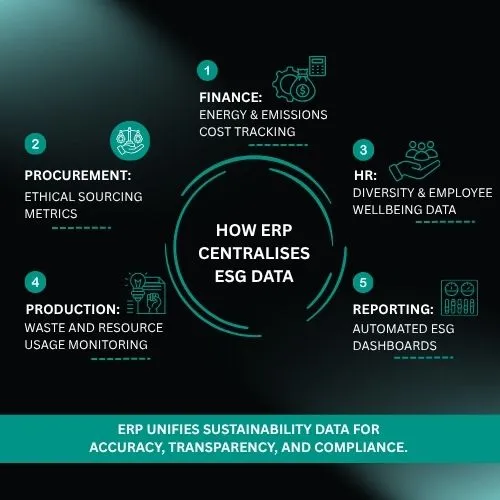
The Crossroads of Sustainability Means ERP is a synthesis of the entirety of the necessary tasks of the organisation. Like production and procurement, HR and finance, and other stakeholders in one key process. Here are the ways ERP systems can specifically help drive sustainability and ESG processes.
1. Information and Accuracy
Centralised Information and Accurate Information. ESG reporting is also referred to as wide reporting. It involves the collection of data in the company, such as energy use, garbage disposal, supply chain, employee contentment, etc. The ERP system will be at a central position. People can source all this information, believing it to be the gospel truth and assuming it remains consistent.
2. Adopted Resources Usage and Carbon Footprint:
Current ERP systems include sustainability modules that closely monitor carbon emissions, energy usage, and water consumption at very precise levels. The businesses find out the degrees of cuts. And announce their earnings automatically based on the principles of sustainability in the UK and in the rest of Europe.
3. Supply chain disclosure:
There are other ESG plinths that are more significant such as ethical sourcing and supplier responsibility. The ERP solutions will enable the enterprises evaluating the performance of the suppliers and monitoring the certification. Certifying that the partners have passed the tests of sustainability. Such a revelation gives the appearance of trust between the consumers and the regulators.
4. Despite the fact that Compliance Automatic:
ESG Reporting: The current ERP software utilises some of the templates of ESG reporting. In some instances, it can be implemented in the following models: GRI, SASB and TCFD. The companies will be able to computerise the logic of developing reports, confirmation of the presence of the rules, and the possibility of the teams. To realize the value of the high level strategic activities instead of spending time on data wrangling.
5. Performance Dashboards:
Sustainability: ERP dashboards will show the most crucial sustainability indicators. The calendar time will enable the management to know how much energy the waste will reduce, the per cent of diversity, etc.
Competitive Advantage vs. Remuneration.
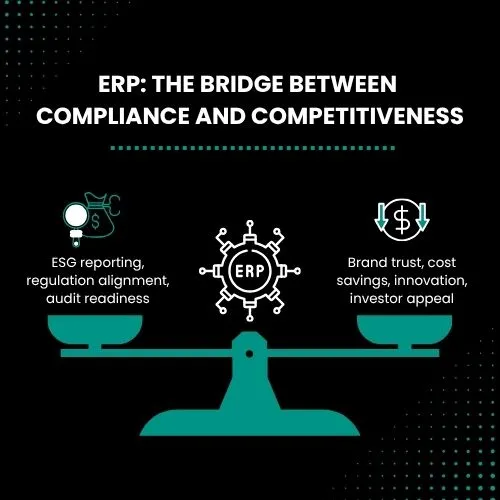
Businesses that strategically integrate sustainability into their operations gain a competitive edge over others. They must still comply with ESG requirements, which have become mandatory. Using ERP systems, firms will reflect sustainability indicators in their day-to-day operations as follows:
• Enhanced Brand Image: It is the transparent reporting of the ESG that will facilitate agitating the trust of the customers and the trust of the investors.
Furthermore, it is possible to conserve the energy. This can be accomplished along with reducing the quantity of the waste through the assistance of the appropriate control over the resources.
More Investor Receptive: Investors are placing more pressure on firms whose cumulative data on ESG strategies is now becoming established.
Future:
Prospect of Sustainable Business of ERP.
All these will be based on the ERP in which the sustainability reporting will be automated and transparent and traceable. The ERP systems can give estimates of ESG analytics in a shorter time than the introduction of AI and IoT integrations. That will remove the problems in the chain at an early stage to predict the risks. Streamline the supply chains and reduce their carbon footprints.
The third reason is that according to the argument, the ERP systems are not centered on the subject matter of financial or operational efficiencies but changes of sustainability. Because of the needs analysis of the firms in the UK was compelled to poly-navigate the requirements of the augmented demand of the compliance with the legal statutes of the ESG.The augmented examination of the customers, the solution would be of ERP to open a window to a more accountable, sustainable and transparent future.