


The current turbulent global economy has ensured that the contemporary supply chain disruption has become the order of the day. Any form of disruption can deliver shockwaves in any sector, whether it is provoked by a geopolitical crisis, shifts in consumer demand, natural disasters or cyberattacks. In these uncertain times, the one thing that is assured is that overcoming the resistance is here to stay; it is essential. And the next key to the modern resilience is the intelligent supply chain management operating on the ERP (Enterprise Resource Planning) systems.
The Supply Chain Intelligence Requirement.
The old supply chains were operated using inflexible procedures and face-to-face communication. This was working in a stable environment but revealed the businesses to calamities when they suffered as a result of being struck by disruptions. The invisibility and agility became a rather self-evident weakness because of the COVID-19 pandemic. The shortage of semiconductors or the delays in delivery.
ERP is the backbone of supply chain resilience.
The computerised system is the ERP system that represents the digital platform of intelligent supply chain management. ERP systems allow the decision-makers to respond faster. And more strategically to the challenges by combining the activities of all the departments. Including procurement, manufacturing, logistics, finance, and sales, into one source of truth.
The following is an example of how ERP enables resilience on both sides of the supply chain:
1. End-to-End Visibility
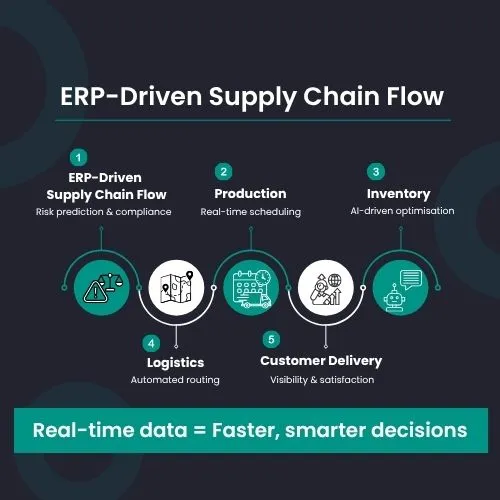
ERP systems bring together data of suppliers, warehouses, and distribution channels in a single dashboard. This real-time visibility enables the managers to monitor inventory, shipments and suppliers’ performance. So that any bottlenecks or risks are identified early.
2. Risk Mitigation Predictive Analytics.
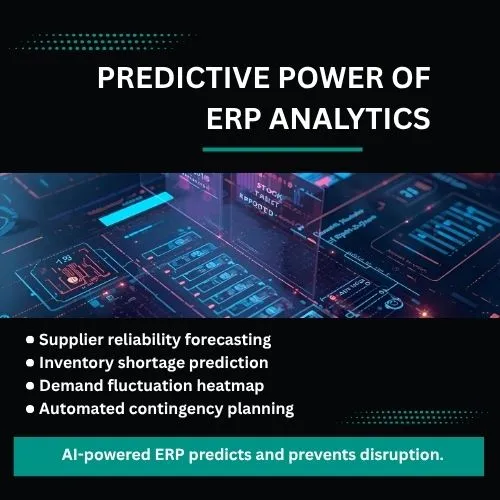
ERP systems at advanced stages utilise AI and machine learning to predict demand, define supplier reliability, and make a simulated scenario of what-if. The information assists companies in strategising contingencies such as rerouting of their logistics or use of alternate suppliers before they get into trouble.
3. Automation for Efficiency
Automation minimises human errors and makes the processes quick. As an example, automated purchase orders may be used to cause replenishment when stock levels are decreasing, and robotic process automation (RPA) may be used to handle repetitive administrative duties, allowing teams to dedicate their time to strategy and innovation.
4. Agile Decision-Making
In case of disruptions, agility is the defining factor of survival. A centralised data ecosystem through ERP allows leaders to make informed real-time decisions, be it in terms of reallocating stock, changing production schedules, or changing pricing strategies.
The ERP Integration to Develop a Resilient Supply Chain.
It does not take one day to develop resilience; it is a smart process that is done by planning and improvement. The following is the way organisations can develop a truly resilient supply chain using ERP:
• 1. Empower Supplier Partnership.
ERP systems will enable free flow of communication and exchange of data with suppliers. This openness leads to better collaborations and promotes stability, so businesses can change directions rather fast when the main suppliers are under siege.
• 2. Minimise Inventory and Logistics.
ERP solutions offer better inventory management solutions, which can ensure that companies do not run out of stock or products. Intelligent logistics management modules of ERP systems streamline routing and fuel expenditures and delivery times, among others, which are essential in the case of a crisis.
• 3. Leverage Real-Time Data to Be Proactive.
Rather than responding to issues, the resilient companies are ahead of them. Live data insights enable an organisation to identify trends and anomalies at the beginning and take proactive measures.
• 4. Increase Compliance and Risk Management.
As the global supply chain undergoes increased regulations, the ERP makes sure that they are met through digital records, through automation of audits and delivers traceability throughout the value chain.
Case in Point: Action Research Resilience.
In a geopolitical dispute that a global electronics manufacturer had to endure with the sudden shortage of raw materials, the predictive analytics module of its ERP system signalled the possible gap in the supply several weeks before its actual occurrence. Based on the insights of ERP, the company began to redistribute the stocks of low-demand areas, find new suppliers, and rearrange the production schedule, all in days. The result? Reduced downtimes and long-term delivery promises.
Supply Chain Resilience in the Future.
The next generation of the ERP technologies will be even smarter, as the technology is further advanced, and will be marked with the use of IoT sensors, AI-based predictions, blockchain-based tracking of goods, and sustainability analytics. These innovations are the ones that will help the companies to act both in an efficient way and in a responsible and sustainable one even during the disruption that the world is currently experiencing.
Final Thoughts
Resilience ceases to be a reactive strategy; it is a proactive strategy. ERP during a disruption will allow the business to possess the resources to survive the turbulence, besides thriving in such a scenario by smart supply chain management. With the help of the right ERP solution, companies will be able to make uncertainty sound like opportunity – they can build not just interconnected supply chains, but even smart ones.